Grief is a hard thing. Most, if not all, of us have experience grief. Grief is defined by the Oxford English Dictionary as, “Intense sorrow, especially caused by someone’s death.” We most often connect the idea of grief with death, but that is not the complete picture. Grief can be experienced in many parts of our lives. We can have grief due to a loss of a relationship, the loss of a job, the changes of life, empty nest situation, loss of a home due to sale or a move, and so much more.
At funerals in our tradition there is a Bible verse which is read as part of the beginning liturgy. The liturgy from Lutheran Book of Worship 1978 (LBW) notes, “Blessed be the God and Father of our Lord Jesus Christ, the source of all mercy and the God of all consolation. He comforts us in all our sorrows so that we can comfort others in their sorrows with the consolation we ourselves have received from God,” to which the congregation replies, “Thanks be to God.”
This is a paraphrase of 2 Corinthians 1:3-4, which read, “Blessed be the God and Father of our Lord Jesus Christ, the Father of mercies and the God of all consolation, who consoles us in all our affliction, so that we may be able to console those who are in any affliction with the consolation with which we ourselves are consoled by God.”
For the context of grief and loss, this takes the general principal of, “Blessed to be a blessing.” Just as the Patriarch Abraham was given much, and was called upon to use that to be a benefit to others, we, too, are comforted in our sorrow by God so that we can also be a comfort to others. We get to use our experience with God’s work with us in grief to help others in their times of life.
Our benefit to others can take many forms. One part of this is when we listen to those who are grieving. We can listen without trying to solve their problems nor showing condemnation. The second benefit to others is when we share our stories of grief. By telling our stories we can help others know some important truths. Among those are that they are not alone in their grief, for now they know that others have gone through such experiences. We can also help them see that grief is not the end. There are many things through which they will go, but, with God’s help and the help of others, we can live through grief and live beyond the most difficult moments.
Our care for those who experiencing grief is a godly calling, founded in the Word of God. All of us can help others. All of us can be agents of God’s sure and strong comfort for others in their times of great loss.
Prayer
Almighty God, your love never fails, and you can turn the shadow of death into daybreak. Help us to receive your word with believing hearts, so that, confident in your promises, we may have hope and be lifted out of sorrow into the joy and peace of your presence; through Jesus Christ our Savior and Lord. Amen
So often our perspective is very short. We look at what is happening maybe for a hour, a day, a week, a month, or maybe a little more. Sometimes we get thinking about bigger goals in life and look into several years into the future. But, most of the time, our perspective is usually pretty short.
This is not necessarily wrong, for so much of life just about trying to get through the day at work, the medical appointments, concern for one’s children, and so much more. It is a beautiful blessing from God when we can see beyond the moment or the day.
Our reading from Psalm 30 reminds us of this opportunity we have from God to have a longer perspective on life. We read is Psalm 30:12b, “O LORD my God, I will give thanks to you forever.” This follows a series of prayers of thanks explaining how God has helped the psalm writer to have a renewed perspective on life. We read a portion of this in verses 11 and 12, “You have turned my mourning into dancing; you have taken off my sackcloth and clothed me with joy, so that my soul may praise you and not be silent.”
God has done, and continues to do, so much for us. In another psalm we read a statement about the length of the list of good things God has done. Psalm 40:5 notes, “You have multiplied, O LORD my God, your wondrous deeds and your thoughts toward us; none can compare with you. Were I to proclaim and tell of them, they would be more than can be counted.” This is another way of saying, “O LORD my God, I will give thanks to you forever.”
Since we have so many things for which we can be thankful, we look toward the future. We can celebrate what God has done, is doing, continues to do, and will be doing for us. As we do this, we can grow more to understand that there is so much more to knowing, following, serving and celebrating our God. We can understand that he is with us now, and he is leading us into the beautiful future we have with him.
Prayer
Almighty God, your love never fails, and you can turn the shadow of death into daybreak. Help us to receive your word with believing hearts, so that, confident in your promises, we may have hope and be lifted out of sorrow into the joy and peace of your presence; through Jesus Christ our Savior and Lord. Amen
Life can be simply overwhelming at times. During this time of the COVID19 Pandemic often our feelings are amplified. This seems especially common with more negative, sad, or fearful feelings. I have heard from many people in various context that life in this time is just too much as they work through these amplified and challenging feelings.
At the same time, we are given powerful reassurance of God’s goodness for us in such times. We are not alone. We are not forsaken in these times. We are not left out in the cold and away from our Lord. In our reading from Psalm 31 we have one such assurance. We read from Psalm 31:21, “Blessed be the LORD, for he has wondrously shown his steadfast love to me when I was beset as a city under siege.”
These times have felt like we are under siege. The world has always put pressure on the people of God. When there is added stress from any cause, the sense of siege on our lives increases. Into this, our Lord comes alongside us to carry us through. By the Word and Spirit we are given assurance that this too shall pass. No matter how long or what happens, the steadfast love of God is there for us. We are assured daily from the book of Romans 8:38-39, where St. Paul notes, “For I am convinced that neither death, nor life, nor angels, nor rulers, nor things present, nor things to come, nor powers, nor height, nor depth, nor anything else in all creation, will be able to separate us from the love of God in Christ Jesus our Lord.”
The presence of the Lord assures us in our darkest, loneliest, and most painful times that we have God’s support. It reminds us that can rely upon the Lord for strength to carry on. It reminds us that, as St. Peter reminds us, “Cast all your anxiety on him, because he cares for you.” (1 Peter 5:7). When life seems to be simply overwhelming at times, we can prayerfully release our burdensome and anxious feelings into God’s strong shoulders.
We do not have to navigate the struggles of life today on our own. With God’s steadfast love, the comfort of the Word of God, and the continued support of the Holy Spirit, we will live with God through this time.
Prayer
Eternal God, amid all the turmoil and changes of the world your love is steadfast and your strength never fails. In this time of danger and trouble, be to us a sure guardian and rock of defense. Guide the leaders of our nation with your wisdom, comfort those in distress, and grant us courage and hope to face the future; through Jesus Christ, our Savior and Lord. Amen
About 30 years ago on Saturday Night Live there was a recurring skit character called The Church Lady. This character, portrayed by comedian Dana Carvey, presented a negative stereotype of hypercritical Christians. Carvey’s character would criticize people, whether present or not. The Church Lady would regularly accuse people of being or working for Satan. All of this was for comedy and satire. With satire there is always the possibility that some of what is being said is very close to the truth.
One thing which has been a struggle for Christians for millennia is that we have fallen into the trap of pointing out the sin of others. In this, we often totally avoid addressing our own sinfulness. You see, it is much more comfortable to tell the world what is wrong with another person than to acknowledge one’s own sin.
In today’s reading from Luke 6, our Lord addresses this very issue. When teaching about casting judgment against other, Jesus states, “Why do you see the speck in your neighbor’s eye, but do not notice the log in your own eye? Or how can you say to your neighbor, ‘Friend, let me take out the speck in your eye,’ when you yourself do not see the log in your own eye? You hypocrite, first take the log out of your own eye, and then you will see clearly to take the speck out of your neighbor’s eye.”
The speck is the minor sin of another person. The log or plank is the significant sin in the life of the person casting judgment against the other. Our Lord wants us to work on what is wrong with our own lives, and to get back on track with God’s ways. This is what the scriptures call, “repentance.” Repentance is the first call of God for our lives.
Jesus points out this truth later in Luke 13:1-5, “At that very time there were some present who told him about the Galileans whose blood Pilate had mingled with their sacrifices. He asked them, “Do you think that because these Galileans suffered in this way they were worse sinners than all other Galileans? No, I tell you; but unless you repent, you will all perish as they did. Or those eighteen who were killed when the tower of Siloam fell on them—do you think that they were worse offenders than all the others living in Jerusalem? No, I tell you; but unless you repent, you will all perish just as they did.”” Jesus reminds people to deal with their own sinfulness first, and to get back on track with the Lord. To complain or accuse or worry about the sin of others is merely a distraction from responding to the gracious call of God.
The account of the woman caught in the act of adultery in John 7:53 – 8:11 is another way Jesus addressed this same issue.
The fictional and satirical Church Lady is very much counter to God’s will for our lives. Instead, we are daily to do what Jesus said in his first sermon in Mark 1:15, where he said, “The time is fulfilled, and the kingdom of God has come near; repent, and believe in the good news.” It is not about the sin of others, it is about how we address our own sin before our God. Remember, he is gracious and merciful, slow to anger, and abounding in steadfast love.
Prayer
Almighty God, by our baptism into the death and resurrection of your Son, Jesus Christ, you turn us from the old life of sin. Grant that we who are reborn to new life in him may live in righteousness and holiness all our days, through your Son, Jesus Christ our Lord. Amen
This summer has been filled with contentious misery across our land. There has been an amplification of some of the difficult patterns of human sin. From various causes and sources here has been an intensification of hate, division, devaluation of human life. We have witnessed the spread of misinformation and lies. We have seen longtime friends break with one another. We have seen an intensification of political and social division. We have seen an increase of violence, intimidation, and vigilantism.
There are many causes of these, but that is not what I am here to debate. I am not going to point fingers, for the guilty parties are more than I can count on my fingers, and this is not about accusing one party or another.
Our readings from Luke have Jesus teaching us about how we are to respond to hatred and division among people. His statements counter much of what we, in our sin, would want to do when times get difficult. Often, we want to respond with greater anger and even violence to the bad behavior of others.
Jesus presents a different pattern for response. Here is what our Savior teaches, “But I say to you that listen, Love your enemies, do good to those who hate you, bless those who curse you, pray for those who abuse you. If anyone strikes you on the cheek, offer the other also; and from anyone who takes away your coat do not withhold even your shirt. Give to everyone who begs from you; and if anyone takes away your goods, do not ask for them again. Do to others as you would have them do to you.”
We are so often drawn to the emotionally intense and sometimes loud or violent response to difficulty, conflict, and opposition. Sometimes we may even want to, “hit them back twice as hard and twice as many times,” as I have heard some say over my years. If God were to have taken that approach, then we would all have been dead long ago.
Taking the Jesus way in such matters is very much not easy. There is one thing which we can do which will surely help us. We can pray for the Holy Spirit of God to produce fruit in our lives. Remember the, “Fruit of the Spirit,” in Galatians 5:22-26. Here is what St. Paul teaches us, “By contrast, the fruit of the Spirit is love, joy, peace, patience, kindness, generosity, faithfulness, gentleness, and self-control.”
He goes on to say, “There is no law against such things. And those who belong to Christ Jesus have crucified the flesh with its passions and desires. If we live by the Spirit, let us also be guided by the Spirit. Let us not become conceited, competing against one another, envying one another.”
When we face the angst and division of our current day, we are reminded to remember that Jesus has died for the forgiveness of these things. He has brought with him to the cross the fleshly passions and desires which stir us to respond to this world with increased hatred and division which depersonalize our perceived enemies. The Holy Spirit and the teachings of Jesus turn our lives toward peace and reconciliation. Initially it is a harder way, but it is the way of Jesus.
Prayer
Gracious God, your Son called on you to forgive his enemies while he was suffering shame and death. Lead our enemies and us from prejudice to truth; deliver them and us from hatred, cruelty, and revenge; and in your good time enable us all to stand reconciled before you; through Jesus Christ, our Savior and Lord. Amen
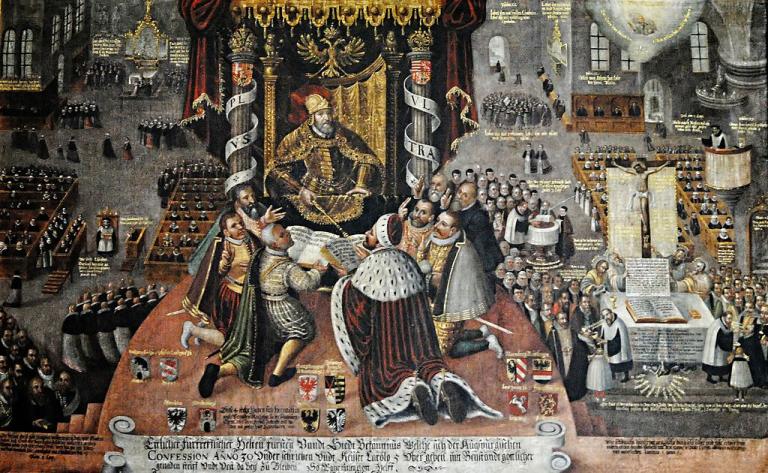
The central document of the Lutheran teachings is the Augsburg Confession. This was presented to the Holy Roman Emperor, Charles V, on June 25, 1530. From this we continue to highlight the 4th and 6th articles or points of the Augsburg Confession as central to our connection with God. You can read the entire document in translation at this link: Click Link
Here are those two articles:
Article IV. Concerning Justification.
Likewise, they (the Lutheran Reformation Leaders) teach that human beings cannot be justified before God by their own powers, merits, or works. But they are justified as a gift on account of Christ through faith when they believe that they are received into grace and that their sins are forgiven on account of Christ, who by his death made satisfaction for our sins. God reckons this faith as righteousness (Romans 3:21-26 and 4:5).
Article VI. Concerning the New Obedience
Likewise, they teach that this faith is bound to yield good fruits and that it ought to do good works commanded by God on account of God’s will and not so that we may trust in these works to merit justification before God. For forgiveness of sins and justification are taken hold of by faith, as the saying of Christ also testifies Luke 17:10: “When you have done all [things] . . . say, ‘We are worthless slaves.’” The authors of the ancient church teach the same. For Ambrose says: “It is established by God that whoever believes in Christ shall be saved without work, by faith alone, receiving the forgiveness of sins as a gift.”
We highlight these because these reminds us that our relationship with God is first and foremost about what God has done for us through the death and resurrection of Jesus Christ. It is about God’s abundant grace which restores us to an eternal relationship with the Lord.
The role of good works and doing the right thing is not about trying to gain favor with God. Works are our God guided response to what he has first done for us. Our works are how we share God’s loving care with others.
Just as our works are a faithful response to God’s action for us, we must also realize another truth: we do not follow the commands of God simply for the sake of doing the action. In other words, our faith is not about following the rules. Rather, our faith is about being reconnected with Jesus. By being in a restored relationship with Jesus, we are given the ability to live according to God’s most excellent way.
I mention this because our reading from Luke 6 points to the greater purpose of observing the Sabbath. This, and other teachings of Jesus, teach us that the purpose of the Law of God is to bring us life. We don’t just do things for the sake of following rules. Faith in Jesus is not about following the rules. Faith in Jesus is not about trying to earn favor with God by, “doing the right thing.” It is about being reconciled to God through the saving work of Jesus. It is about being stirred to follow the way of Jesus in how we love, serve, worship, teach, and live. The commands of God are there to guide our response to what God has first done for us. As St. John teaches us in 1 John 4:19, “We love because he first loved us.”
Prayer
Behold, Lord, an empty vessel that needs to be filled. My Lord, fill it. I am weak in the faith; strengthen me. I am cold in love; warm me and make me fervent, that my love may go out to my neighbor. I do not have a strong and firm faith; at times I doubt and am unable to trust you altogether. O Lord, help me. Strengthen my faith and trust in you. In you I have sealed the treasure of all I have. I am poor; you are rich and came to be merciful to the poor. I am a sinner; you are upright. With me, there is an abundance of sin; in you is the fullness of righteousness. Therefore I will remain with you, of whom I can receive, but to whom I may not give. Amen
In today’s reading from Luke 5 Jesus mentions fasting. He also notes that his followers do not need to fast when he is among them, as in walking the earth during his ministry. Back at the beginning of Lent this year I prepared a series on the, “Disciplines of Lent.” One of the disciplines of Lent includes the Biblical practice of fasting. I am including that message on fasting from Ash Wednesday, 2020. Most of the readers of this devotion have not likely read or heard this message.
Teachings from Ash Wednesday, February 26, 2020
Today is the beginning of Lent. It is also the beginning of our Lent Series on the Disciplines of Lent. I will be presenting teachings on the core disciplines of Lent. These are outlined in the Invitation to Lent which is shared as part of the Ash Wednesday service each year.
Here is the relevant portion of that invitation: “I invite you, therefore, to the discipline of Lent—self-examination and repentance, prayer and fasting, sacrificial giving and works of love—strengthened by the gifts of word and sacrament.”
Each Wednesday in Lent we will share about 1 of these 6 ways of spiritual discipline. On Ash Wednesday the Gospel Reading from Matthew highlights 2 of these quite boldly.
What is fasting?
Fasting is voluntarily going without food — or any other regularly enjoyed, good gift from God — for the sake of some spiritual purpose. It is markedly counter-cultural in our consumerist society. It is for the purpose of setting our lives toward God, and to resist the urge to succumb to the desires of the body for food or certain kinds of food.
Fasting is a response to what God has first done for us. It helps us refocus our lives on the Lord.
Fasting is a way of responding to God’s grace, and to show God – not others – that we are responding with repentance.
Biblical basis
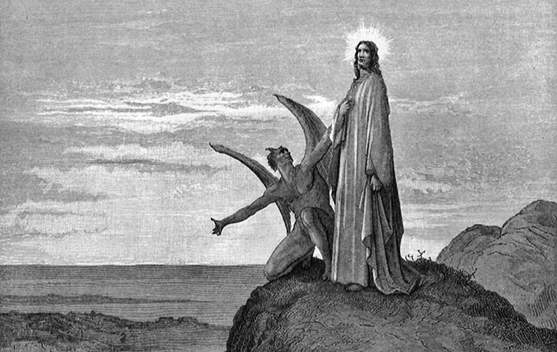
Jesus and the Apostles fasted. It is strongly rooted in the Old Testament and in the Jewish religious culture. The 40 Day time of fasting in Lent is founded in the 40 days following the Baptism of Jesus. During that time Jesus fasted from food and was tempted by the devil. He was resistant to the temptations. This was a period of preparation for his 3 years of ministry.
The fasting by the early church leaders was generally after the Ascension of Jesus. St. Paul fasted as a major part of his spiritual disciplines.
The Faithful People in Scripture fasted and prayed for repentance and forgiveness. They fasted for victory in battle. They fasted for discernment. They prayed for deliverance. They fasted for strength.
We have lost the spiritual discipline of fasting that Jesus took for granted. In the Sermon on the Mount Jesus said, “When you fast…” Not if. I have fasted at various points in my life. I have friends and family members who are regularly participate in fasting from some or all food. They see it as a calling from God, and a way of faithfully following the way of Jesus.
Luther and Fasting
“He who starts with works, turns everything around and gains nothing. In the same way St. Paul after he had taught faith to the Romans, undertakes to teach them many good works saying that they should offer their body as a holy, living, agreeable sacrifice in the service of God. This takes place when one chastises the body with fasting, staying awake, getting dressed, and working. This is what Anna does. All the saints of old did the same. ‘Fasting’ refers to all chastisement and discipline of the body which, although the soul is justified and holy through faith, is still not entirely free of sin and evil inclinations. Thus it is necessary that the body become subdued and chastised and subservient to the soul, as St. Paul says of himself: ‘I chastise my body and bring it under control, so that I, who am teaching others, am not myself disqualified’ [I Cor. 9:27]. St. Peter, too, teaches the same thing in I Peter 2[:5]: ‘You are to offer spiritual sacrifices,’ not sheep and calves, as in the law of Moses, but your own body and yourselves through putting sin to death in the flesh and through the chastisement of the body. Nobody does this unless faith is there previously.
For this reason I have said frequently that the works that come after faith should have the sole purpose and intention of chastising the body and serving one’s neighbor; they are not intended for earning a lot of merit or for making someone pious, for that must be present prior to the works. This is the real service of God in the works, if these works come about quite freely, to honor God. Otherwise what use does he have for your fasting, unless you quell thereby the sin and the flesh which he wants quelled? St. Paul also teaches about fasting of this sort in II Corinthians 6:5, stating among other things that in many fastings we should show ourselves as servants of God.” (Candlemas Sermon on Luke 2:33-40, LW 52:137-139)
Guidelines for Fasting
Christian fasting includes various forms of partial fasts to complete fasting of all food. These fasts can last for a day, a week, a month or, in some cases, all of Lent.
It is unwise and very dangerous to abstain from drinking water during a fast.
Jesus teaches us that we are to go along with life as normal during a fast. Do regular grooming and self-care. We read about this when Jesus said, “17But when you fast, put oil on your head and wash your face, 18so that your fasting may be seen not by others but by your Father who is in secret; and your Father who sees in secret will reward you.”
Fasting is a Biblical and faithful Christian discipline. It is founded in God’s Word, affirmed by Jesus, the Apostles, Martin Luther, and millions upon millions of Christians over time and all over the world.”
Prayer
Gracious God, out of your love and mercy you breathed into dust the breath of life, creating us to serve you and our neighbors. Call forth our prayers and acts of kindness, and strengthen us to face our mortality with confidence in the mercy of your Son, Jesus Christ, our Savior and Lord, who lives and reigns with you and the Holy Spirit, one God, now and forever. Amen
There is something which is the fault of various people. I don’t need to point fingers at anybody on this. The messed-up thing is this: somehow people perceive that they must be perfect, or at least better than others, to become a Christian. There is a misguided idea that you must have it all together to be one of God’s children through Jesus Christ. Some feel that you must be without sin to be welcomed into the fellowship of believers. Based on God’s Word, especially today’s reading from Luke 5, this is most certainly not true.
In Luke we have the calling of Matthew Levi. He was a sinful tax collector. He had been in league with the hated Romans. That didn’t matter to Jesus, and he called Matthew Levin to be a Disciple anyway. This action by Jesus was not received well by the Pharisees. We read in verses 30-32, the interaction of Jesus and the Pharisees: “The Pharisees and their scribes were complaining to his disciples, saying, “Why do you eat and drink with tax collectors and sinners?” Jesus answered, “Those who are well have no need of a physician, but those who are sick; I have come to call not the righteous but sinners to repentance.””
It wasn’t about being good enough for God back then, and today that same policy is to be followed. God calls sinners to repentance. He calls messy, confused, angry, immoral, amoral, abused, abuser, and so much more to stop doing the wrong, and to get back on track with God and his loving ways of the world.
Today is the day to get back on track with the Lord. It doesn’t matter what happened yesterday, last year, or even 10 minutes ago that was wrong. What is most important now is to know is that God loves you beyond measure. God has given himself in Jesus Christ for the forgiveness of your sin. God loves you so much that he is daily seeking you out, for his greatest desire is life for and fellowship with his beloved people – the human race. When we receive his amazing love and forgiveness, we have everything we need to be reconciled to God and his people. Life with Jesus is never about being good enough. It is about God’s love for us now, when we need it most.
Prayer
Almighty God, by our baptism into the death and resurrection of your Son, Jesus Christ, you turn us from the old life of sin. Grant that we who are reborn to new life in him may live in righteousness and holiness all our days, through your Son, Jesus Christ our Lord. Amen
Psalm 1 is the introduction to the book of Psalms. It sets the tone of worship of the Lord and the centrality of the Covenant with the people of Israel. It reminds us of the importance and benefits of being connected with God and his Holy Word. When we are connected with God and Word, our life is built up. When we are ignoring God and his Word, our life and relationship with God are degraded.
The encouragement to meditate on the Word of God is affirmed in both the Old and New Testaments. In Colossians 3:16 we read, “Let the word of Christ dwell in you richly; teach and admonish one another in all wisdom; and with gratitude in your hearts sing psalms, hymns, and spiritual songs to God.”
What a beautiful concept – Let the word of Christ dwell in you richly. It is not just to go past your mind or be thought of momentarily. We are invited to have the Word of Christ become an enriching and life-giving part of how we live every day. That is like having our lives rooted in the word. Psalm 1 tells it like this, “They are like trees planted by streams of water, which yield their fruit in its season, and their leaves do not wither.”
One of my encouragements has been to be reading from God’s Word every day. Daily Bible Reading can be a faithful discipline which leads to the Word of Christ dwelling in us richly.
There is a beautiful and meditative sung version of Psalm 1. The version I know is sung by Kim Hill, and the song was written by Michelle Wagner, based on Psalm 1. Click the video play arrow below to watch and listen.
.
Prayer
Gracious and holy God, give us diligence to seek you, wisdom to perceive you, and patience to wait for you. Grant us, O God, a mind to meditate on you; eyes to behold you; ears to listen for your word; a heart to love you; and a life to proclaim you; through the power of the Spirit of Jesus Christ, our Savior and Lord. Amen
One of the delights of life is music. It is source of joy. It is a connection point with our deepest emotions. Music draws people together. It comforts us in our lonely moments. It lifts us to the divine. It helps our minds make connections. Music improves our understanding of math. Music help us to remember stories, prayers, ideas, and more. It reminds us of favorite things of the past. Music invokes situations and feelings from our lives. This beautiful gift of God links us to God in ways that nothing else does.
The Greek word, “psalm,” means, “song,” in English. Every one of the psalms in the Bible is a song. It is the hymnbook of the people of Israel. Music was central to the life of ancient Israel. Remember King David. He was a musician and poet, along with his leadership and military skills. When you read the Psalms, check out the introduction to each psalm. You will see King David connected with many of these.
Psalm 150, which is part of today’s readings, is a grand conclusion to the hymn book of Israel. It also highlights the centrality of music in our lives. It does this by listing instruments used to proclaim the praise of the Lord in music. These verses are especially about that:
“3 Praise him with trumpet sound;
praise him with lute and harp!
4 Praise him with tambourine and dance;
praise him with strings and pipe!
5 Praise him with clanging cymbals;
praise him with loud clashing cymbals!”
Trumpet, lute, harp, tambourine, dance, strings, pipe, and cymbals. These were instruments used in the worship of God, but these are by no means a limit. In the millennia since this was written we have invented all sorts of instruments and styles of music. We have formed new varieties of vocal stylings. In the spirit of this psalm we can utilize any and/or all of these means to glorify the Lord.
We can include music in our lives to honor God in many and various ways.
1 – strive to sing when you gather for worship.
2 – include singing a hymn or song in your daily devotions
3 – play your instrument. Choose some songs which glorify God.
4 – listen to recordings of songs which celebrate the Lord
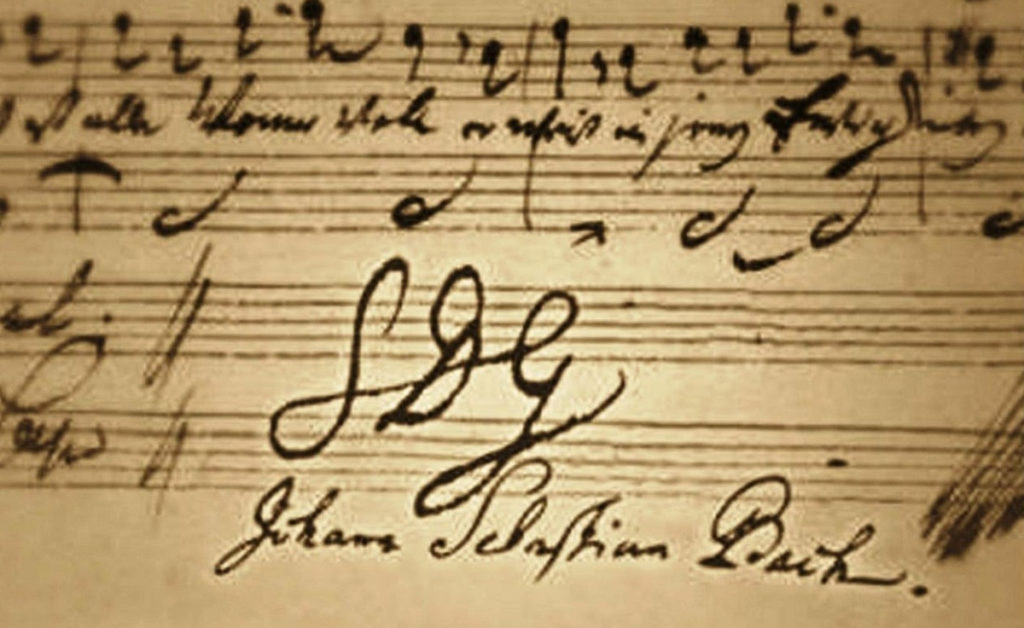
5 – listen to music by J. S. Bach. He was a Lutheran church musician and he dedicated everything to God. There is the interesting insertion in Bach’s own hand of the letters J.J. at the beginning of each composition, and S.D.G. at the end. They are abbreviations for the Latin, “Jesu Juva,”, meaning, “Jesus Help Me!” He noted, “Soli Deo Gloria,” meaning, “To the Glory of God Alone!”
Prayer
O God of majesty, whom saints and angels delight to worship: Pour out your Spirit on your servants who, with the gifts of music, enliven our praises and proclaim your word with power. Through this ministry give us new awareness of your beauty and grace, and join our voices with all the choirs of heaven, both now and forever; through your Son, Jesus Christ, our Lord. Amen





 Martin Luther Lutheran Church